Choose the right analyser for your application
The need for measurement is growing. In addition to understanding energy consumption, an increasing number of companies want insight into the load on their electrical installation and the quality of voltage and current (Power Quality). They also want to receive timely warnings in the event of any disturbances.
Applying the right meter in practice
The level of insight required depends on the application. In some cases, a simple energy measurement is sufficient, while in others a detailed analysis of power quality or disturbances is necessary. The fortop range offers a variety of analysers to meet these needs.
- Power quality analysers: measurements according to international standards (such as IEC 61000-4-30), with accurate recording of power quality, harmonics and flicker.
- Power analysers: more extensive analysis of power quality, with a high sample rate and recording of dips, peaks and transients, among others.
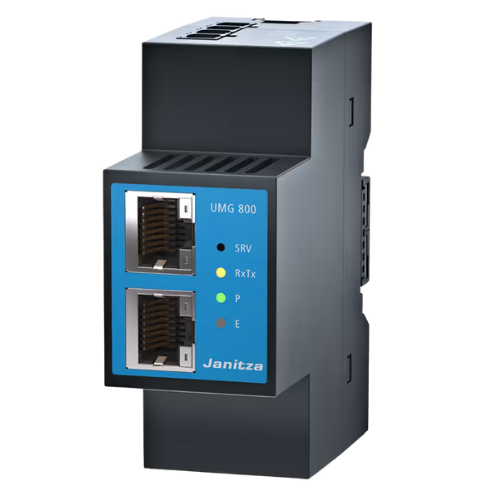
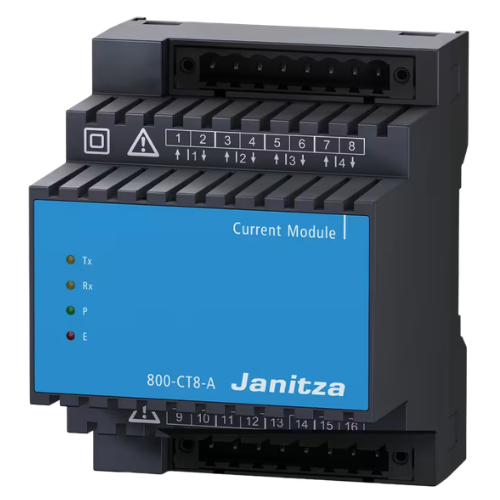
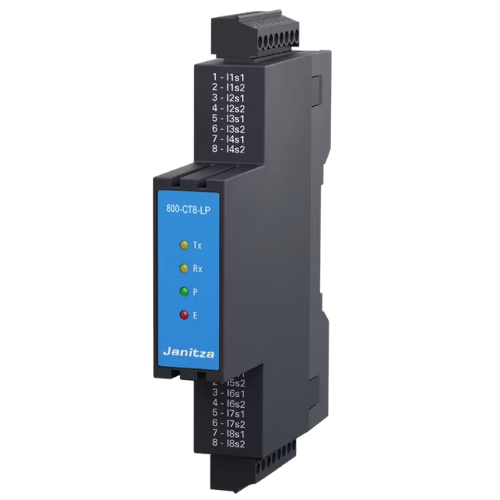
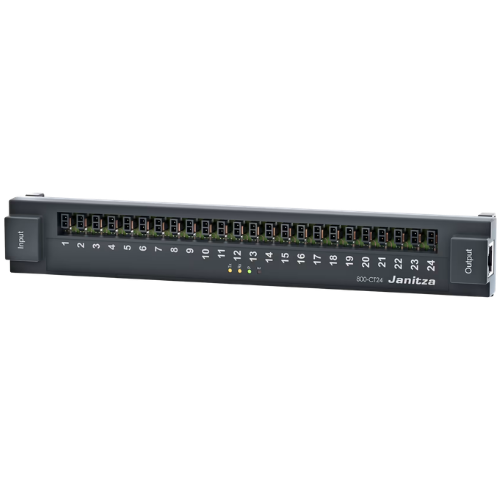
- Multichannel analysers: suitable for measuring multiple groups simultaneously with one measuring device, offering advantages such as space saving, reduced installation time and one central readout.
- Energy analysers: suitable for general energy measurements, providing insight into electrical variables and a basic analysis of harmonics.
Which analyser suits your application?
The choice of analyser depends on what you want to measure and how you want the data to be presented.

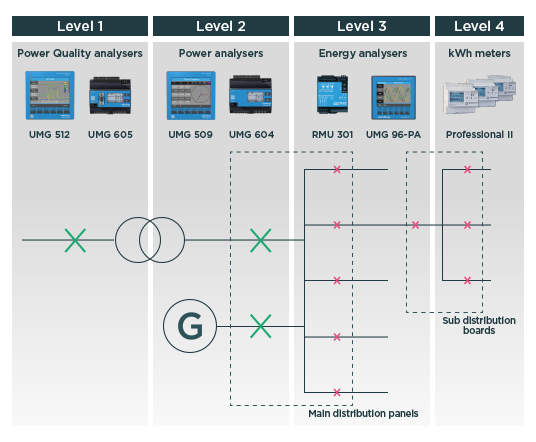
Blueprint measurement levels - reasons to measure
Level 1 (Incoming feeders) ⇒ power quality analysers
- Verification measurement of kWh consumption
- Monitoring the contracted capacity with the grid operator
- Recording of voltage dips and peaks
- Monitoring of power quality in accordance with EN 50160
Level 2 (Main LV distribution – incoming = LV side of the transformer) ⇒ power analysers
- Monitoring available capacity on the transformer and generator
- Monitoring of the power factor (inductive/capacitive)
- Monitoring of power quality in accordance with IEC 61000-2-4
- Recording of voltage dips, peaks and waveforms
- Measurement of energy consumption
Level 3 (Main LV distribution – outgoing feeders) ⇒ energy analysers
- Recording consumption per building section or installation part
- Recording the source of network pollution
- Determining available capacity per installation part
Level 4 (Sub-distribution – control cabinets) ⇒ DIN-rail kWh meters
- Recording consumption per installation part or per end user
- Determining available capacity per installation part
Choose the right Power (Quality) analyser
| Meter group | Power quality analysers | Power analysers | ||||||
| Type | UMG 512-PRO | UMG 605-PRO | UMG 509-PRO | UMG 604-PRO | UMG 96-PQ-L | UMG 96-PQ-L-LP | UMG 96-PQ-L IT | Expansion module for UMG 96-PQ-L / PA |
 |
 |
 |
 |
 |
|
|
 |
|
| General specifications | ||||||||
| Measuring voltage | 600 V (L-L)* | 480 V (L-L) | 600 V (L-L)* | 480 V (L-L) | 600 V (L-L)* | 600 V (L-L)* | 600 V (L-L)* | - |
| Measuring current | 5 A/1 A | 5 A/1 A | 5 A/1 A | 5 A/1 A | 5 A/1 A | 333 mV | 333 mV | - |
| Clock/memory | 256 MB | 128 MB | 256 MB | 128 MB | 64 MB | 64 MB | 64 MB | - |
| Mounting method | Panel 144 | DIN rail | Panel 144 | DIN rail | Panel 96 | Panel 96 | Panel 96 | - |
| Integrated logic | Jasic® | Jasic® | Jasic® | Jasic® | - | - | - | - |
| Web interface | v | v | v | v | - | - | - | - |
| Power Quality | ||||||||
| Harmonic analysis | 1..63 + THD | 1..63 + THD | 1..63 + THD | 1..40 + THD | 1..65 + THD | 1..65 + THD | 1..65 + THD | - |
| Voltage/current channels | 5/4 | 5/4 | 5/4 | 5/4 | 4/3 | 4/3 | 4/3 | -/1 |
| Dips, peaks and transients | v | v | v | v | v | v | v | - |
| Flicker | v | v | - | - | v | v | v | - |
| Residual current monitoring (RCM) | v | - | v | - | Option | Option | Option | v |
| IEC 61000-4-30 | Class A | Class S | - | - | Class S (option) | Class S (option) | Class S (option) | - |
| Reports: EN 50160/EN 61000-2-4 |
v/v | v/v | -/v | -/v | - | - | - | - |
| Accuracy V/A(%) | 0,1/0,2 | 0,2 | 0,1/0,2 | 0,2 | 0,1/0,2 | 0,1/0,2 | 0,1/0,2 | - |
| Accuracy kWh | 0,2s | 0,5s | 0,2s | 0,5s | 0,2s | 0,2s | 0,2s | - |
| Interfaces and protocols | ||||||||
| RS485 (Modbus) | v | v | v | v | v | v | v | - |
| Ethernet | v | v | v | v | Option | Option | Option | v |
| Profibus DP | v | v | v | - | - | - | - | - |
| BACnet IP | Option | Option | Option | Option | - | - | - | - |
| Inputs and outputs | ||||||||
| Digital inputs/outputs | 2/2 | 2/2 | 2/2 | 2/2 | 3/3 | 3/3 | 3/3 | - |
| Analogue inputs/outputs | 1/- | 1/- | 1/- | 1/- | Option/1 | Option/1 | Option/1 | 3/- |
| Voltage / current channels | 5/4 | 5/4 | 5/4 | 5/4 | 4/3 | 4/3 | 4/3 | -/1 |
| Auxiliary supply voltage and article numbers | ||||||||
| 95..240 VAC/80..300 VDC | JA200414 | JA500416 | JA200412 | JA500415 | - | - | - | - |
| 48..120 VAC/24..150 VDC | JA200219 | JA500231 | JA200222 | JA500225 | - | - | - | - |
| 90..277 VAC/90..250 VDC | - | - | - | - | JA100420 | JA100496 | - | JA900119 |
| 24..90 VAC/24..90 VDC | - | - | - | - | JA100422 | JA100497 | - | - |
| Auxiliary supply voltage and article numbers Class S option UMG 96-PQ-L | ||||||||
| 90..277 VAC/90..250 VDC | - | - | - | - | JA100421 | JA100427 | JA100426 | - |
| 24..90 VAC/24..90 VDC | - | - | - | - | JA100423 | JA100428 | - | - |
* 417 V (L-N) / 720 V (L-L) in 3-phase 4-wire systems (with neutral)
600 V (L-L) in 3-phase 3-wire systems (without neutral)
Choose the right multichannel analyser
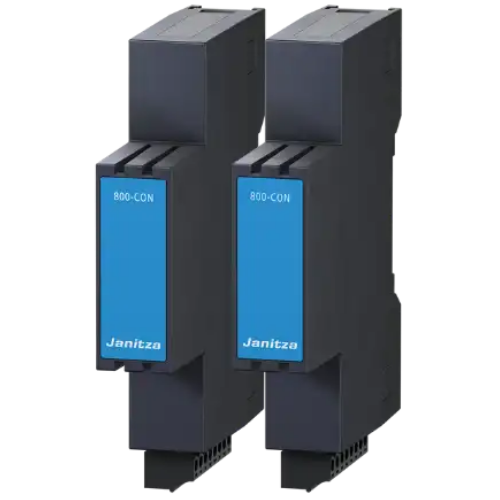
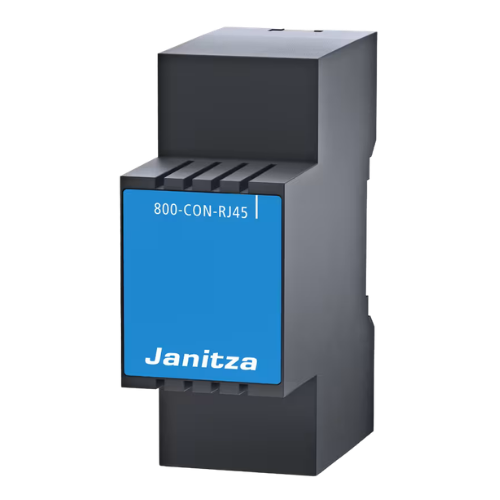
| Meter group | Multichannel analysers | Measuring modules | Communication modules | ||||
| Type | UMG 801 | UMG 800 | 800-CT8-A | 800-CT8-LP | 800-CT24 | 800-CON (set) | 800-CON-RJ45 |
 |
 |
 |
 |
 |
 |
 |
|
| General specifications | |||||||
| Measuring voltage | 690 V (L-L) | 480 V (L-L) | - | - | - | - | - |
| Measuring current | 5 A/1 A | - | 5 A/1 A | 333 mV | 333 mV | - | - |
| Clock/memory | 4 GB | 4 GB | - | - | - | - | - |
| Mounting method | DIN rail | DIN rail | DIN rail | DIN rail | DIN rail | DIN rail | DIN rail |
| Integrated logic | v | v | - | - | - | - | - |
| Web interface | v | v | - | - | - | - | - |
| Power Quality | |||||||
| Harmonic analysis | 1..127/1..63 + THD (U/I) | 1..63 + THD (U/I) | 1..25 + THD | 1..25 + THD | 1..25 + THD | - | - |
| Dips, peaks and transients | v | v | - | - | - | - | - |
| Flicker | v | v | - | - | - | - | - |
| Residual current monitoring (RCM) | v | - | - | - | - | - | - |
| IEC 61000-4-30 | v | v | - | - | - | - | - |
| Reports: EN 50160/EN 61000-2-4 |
v | v | - | - | - | - | - |
| Accuracy V/A(%) | 0,2/0,2 | 0,2/0,2 | -/0,5 | -/0,5 | -/0,5 | - | - |
| Accuracy kWh | 0,5 s | 0,5 s | - | - | - | - | - |
| Interfaces and protocols | |||||||
| RS485 (Modbus) | v | - | - | - | - | - | - |
| Ethernet | v | - | - | - | - | - | - |
| Inputs and outputs | |||||||
| Digital inputs/outputs | 4/4 | - | - | - | - | - | - |
| Analogue inputs/outputs | -/1 | - | - | - | - | - | - |
| Voltage / current channels | 4/8 | - | -/8 | -/8 | - | - | - |
| Auxiliary supply voltage and article numbers | |||||||
| 24 VDC | JA500417 | JA500953 | - | - | - | - | - |
| N/A | - | - | JA500068 | JA900429 | JA500067 | JA500206 | JA500208 |
Choose the right energy analyser
| Meter group | Energy analysers | |||||||||
| Type | UMG 96RM-E | UMG 96RM-CBM | UMG 96RM-P | UMG 96RM-PN | UMG 96RM-M | UMG 96RM | UMG 96-PA | Expansion module for UMG 96-PA / PQ-L | UMG 96-S2 | UMG 103-CBM |
 |
 |
 |
 |
 |
 |
 |
 |
|
 |
 |
| General specifications | ||||||||||
| Clock/memory | 256 MB | 256 MB | 256 MB | - | - | - | 8 MB | - | - | 4 MB |
| Mounting method | Panel 96 | Panel 96 | Panel 96 | Panel 96 | Panel 96 | Panel 96 | Panel 96 | - | Panel 96 | DIN rail |
| Integrated logic | - | - | - | - | - | - | - | - | - | - |
| Power Quality | ||||||||||
| Harmonic analysis | 1..40 + THD | 1..40 + THD | 1..40 + THD | 1..40 + THD | 1..40 + THD | 1..40 + THD | 1..40/25 + THD (U/I) | - | 1..15 + THD | 1..40 + THD |
| Dips, peaks and transients | - | - | - | - | - | - | - | - | - | - |
| Flicker | - | - | - | - | - | - | - | - | - | - |
| Residual current monitoring (RCM) | v | - | - | v | - | - | Option | v | - | - |
| IEC 61000-4-30 | - | - | - | - | - | - | - | - | - | - |
| Reports: EN 50160/EN 61000-2-4 |
- | - | - | - | - | - | - | - | - | - |
| Accuracy V/A(%) | 0,2 | 0,2 | 0,2 | 0,2 | 0,2 | 0,2 | 0,2 | - | 0,2 | 0,2 |
| Accuracy kWh | 0,5s | 0,5s | 0,5s | 0,5s | 0,5s | 0,5s | 0,5s | - | 0,5s | 0,5s |
| Interfaces and protocols | ||||||||||
| RS485 (Modbus) | -/v | -/v | -/v | -/v | -/v | -/v | v | - | v | v |
| Ethernet | v | - | - | 2x | - | - | - | v | - | - |
| USB | - | v | - | - | - | - | - | - | - | - |
| Profibus DP | - | - | v | - | - | - | - | - | - | - |
| M-bus | - | - | - | - | v | - | - | - | - | - |
| PROFINET | - | - | - | v | - | - | - | - | - | - |
| BACnet IP | Option | - | - | - | - | - | - | - | - | - |
| Inputs and outputs | ||||||||||
| Digital inputs/outputs | 3/5 | 4/6 | 4/6 | 3/5 | -/2 | -/2 | 3/3 | - | -/1* | -/- |
| Analogue inputs/outputs | 2/- | -/- | -/- | 2/- | -/- | -/- | option/1 | 3/- | -/- | -/- |
| Voltage / current channels | 4/4 | 4/4 | 4/4 | 4/4 | 4/3 | 4/3 | 4/3 | -/1 | 4/3 | 3/3 |
| Auxiliary supply voltage and article numbers | ||||||||||
| 90..277 VAC/90..250 VDC | JA101912 | JA100792 | JA101910 | JA100085 | JA101911 | JA101905 | JA100284 | JA900119 | JA100400 | JA500138 |
| 24..90 VAC/24..90 VDC | JA100104 | JA100126 | JA100133 | JA100134 | JA100105 | JA100101 | JA100304 | - | - | - |
* Only for pulse, kWh and kVARh
Choose the right kWh meter
| gridXense Professional II kWh meters | ||||
 |
|
|
|
|
| Consumption values | ||||
| Energy consumption (kWh) | ∑ / per phase / 2 tariffs | |||
| Energy supply (kWh) | ∑ / 2 tariffs | |||
| Inductive reactive consumption | ∑ / per phase / 2 tariffs | |||
| Capacitive reactive consumption | ∑ / 2 tariffs | |||
| Other measured data | ||||
| Communication protocol | None | M-Bus | Modbus RTU | Modbus TCP |
| Current | ∑ / per phase / min. / max. | |||
| Voltage (V) L-N | Per phase / min. / max. | |||
| Voltage (V) L-L | Per phase | |||
| Power factor (cos-phi) | Per phase | |||
| Active power (kW) | ∑ / per phase / min. / max. | |||
| Reactive power (kVAr) | ∑ / per phase | |||
| Frequency | ∑ | |||
| Number of voltage interruptions | ∑ | |||
| Outputs | 4x pulse for kWh or kVARh or as switching output | |||
| Memory | - | |||
| Webserver/peak shaving function | -/- | |||
| Article numbers | ||||
| Direct measurement | FP001001 | FP001004 | FP001006 | FP001007 |
| Indirect measurement via current transformer | FP001101 | FP001104 | FP001106 | FP001107 |
From snapshot to continuous insight
For any company, a thorough understanding of its electrical installation is essential. This insight can be gained through measurement, either temporary or permanent. But which should you choose? Is a temporary measurement a sensible option? The answer is no. A temporary measurement provides only a snapshot of the installation, capturing a single moment in time.
Power consumption is influenced by production processes, weather conditions, and seasonal variations, while disturbances can occur unexpectedly. Permanent measurement, on the other hand, is like a continuous film, recording everything necessary for detailed analysis and reporting.


Why measure power quality with a power analyser?
Power quality issues are common, yet not always obvious. Unexplained downtime of machines or installations raises various questions. In many cases, the root cause lies in the quality of the electrical energy supplied. For a detailed explanation of what power quality entails, please refer to our white paper, Power Quality.
View voltage dips with an analyser
Imagine you are in a room with the lights on. For a fraction of a second, the lights go out and then immediately come back on. What causes this? A voltage dip.
Using an analyser, you can gain clear insight into these voltage dips. For a detailed explanation of what voltage dips are and how they occur, please refer to our white paper on Voltage Dips.

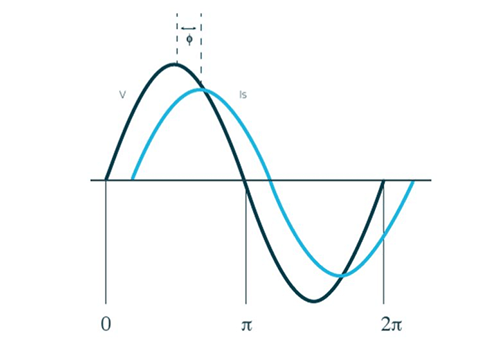
Why improve the power factor (cos phi)?
Enhancing the power factor (cos φ) by reducing reactive power can offer significant benefits, along with several useful side effects. But which compensation techniques are available, and how are they implemented in practice?
What are higher harmonics?
The increase in electronic equipment is causing growing distortion in the electrical network. This results in higher harmonics. These harmonics negatively affect operational reliability. What are the consequences of harmonics and how can this phenomenon be controlled?